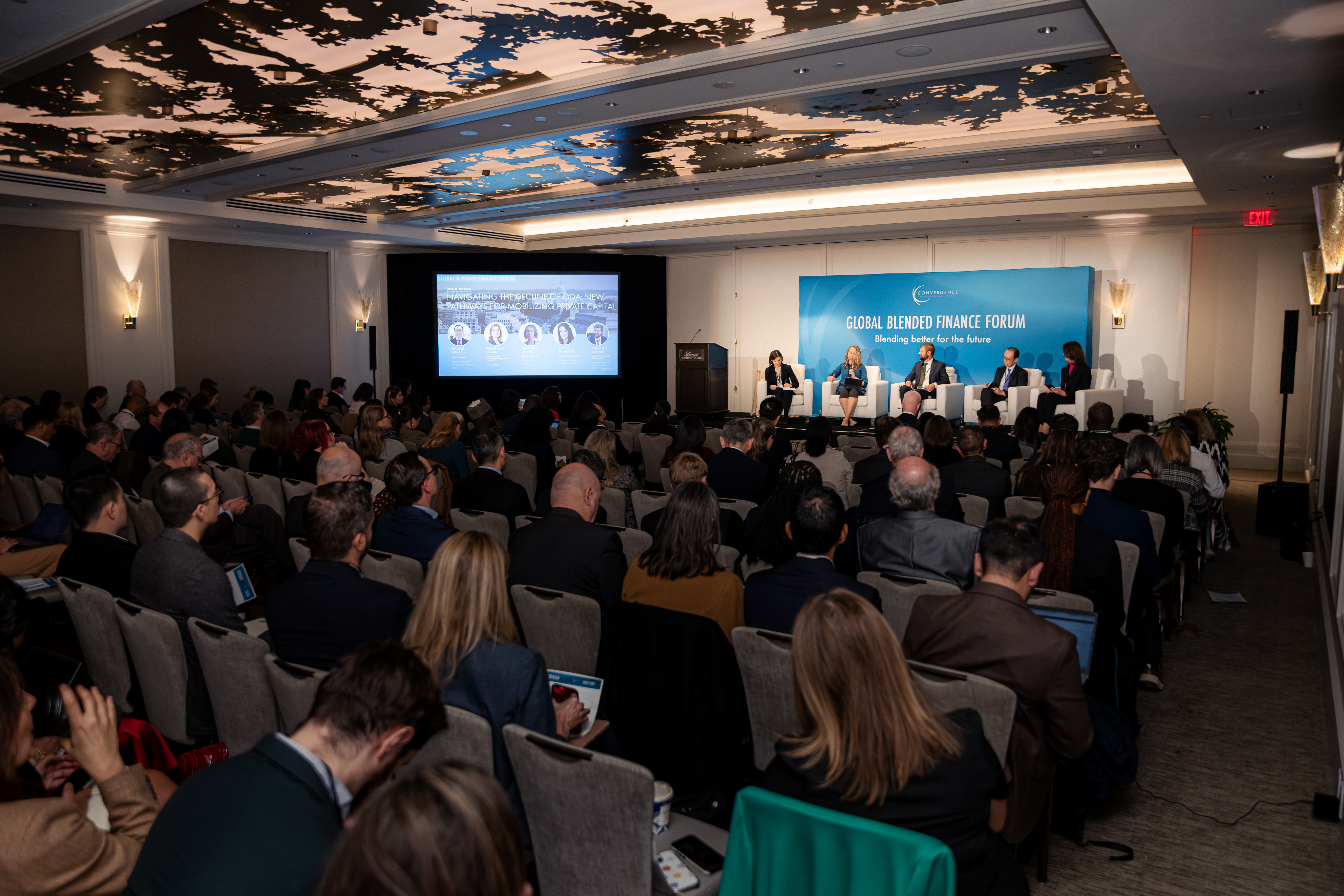
Earlier this month, Convergence hosted its inaugural Global Blended Finance Forum in Washington DC to celebrate its 10 year anniversary.
The Forum brought together over 250 participants from the public, private, and philanthropic sectors, from over 40 different countries. It was hosted at a moment where blended finance hovers at an important inflection point. As ODA diminishes, it is an opportunity for blended finance to be more strategic, efficient, and fit-for-purpose. We saw the Forum as a moment to think about the progress that has been made and to define the next decade.
As such, the Forum covered a range of the most pressing issues in blended finance today, including the reality of diminishing ODA, the importance of local capital mobilization, the emerging role of insurance, the rising interest in guarantee structures, the imperative for standardization, and much more.
Participants were treated to a variety of formats and opportunities to network, including an optional blended finance primer, roundtables focused on specific topics, regional break out groups, in addition to panels and spotlight sessions.
Below are some takeaways from the Forum:
-
A hunger for collaboration and community: As the consequences of reduced foreign aid budgets begin to ripple through the blended finance market and beyond, a palpable sense of urgency, paired with a strong desire for community, defined the Forum. Attendees were eager to engage openly and substantively with each other. Blended finance is, by nature, a fragmented field, but the Forum made it clear that the practitioners driving these deals are determined to change that. Across three days, we heard from a wide diversity of voices and witnessed vital connections forming across sectors and regions.
-
Standardization was the word of the day: Standardization emerged as a critical enabler for scaling blended finance by improving efficiency, reducing transaction costs, aligning objectives, fostering collaboration, and building investor confidence.
Attendees recognized that blended finance must evolve from generating bespoke deals to also delivering standardized, scalable instruments to unlock the vast capital needed for sustainable development. This sentiment was echoed by Matt Kaczmarek, Head of Emerging Market Credit Strategy at BlackRock, during the Forum’s opening keynote, “To amplify impact and scale investment in emerging markets, we must standardize our approaches—building common frameworks, clear objectives, and investor-friendly structures that reduce complexity and enable efficient, large-scale collaboration.”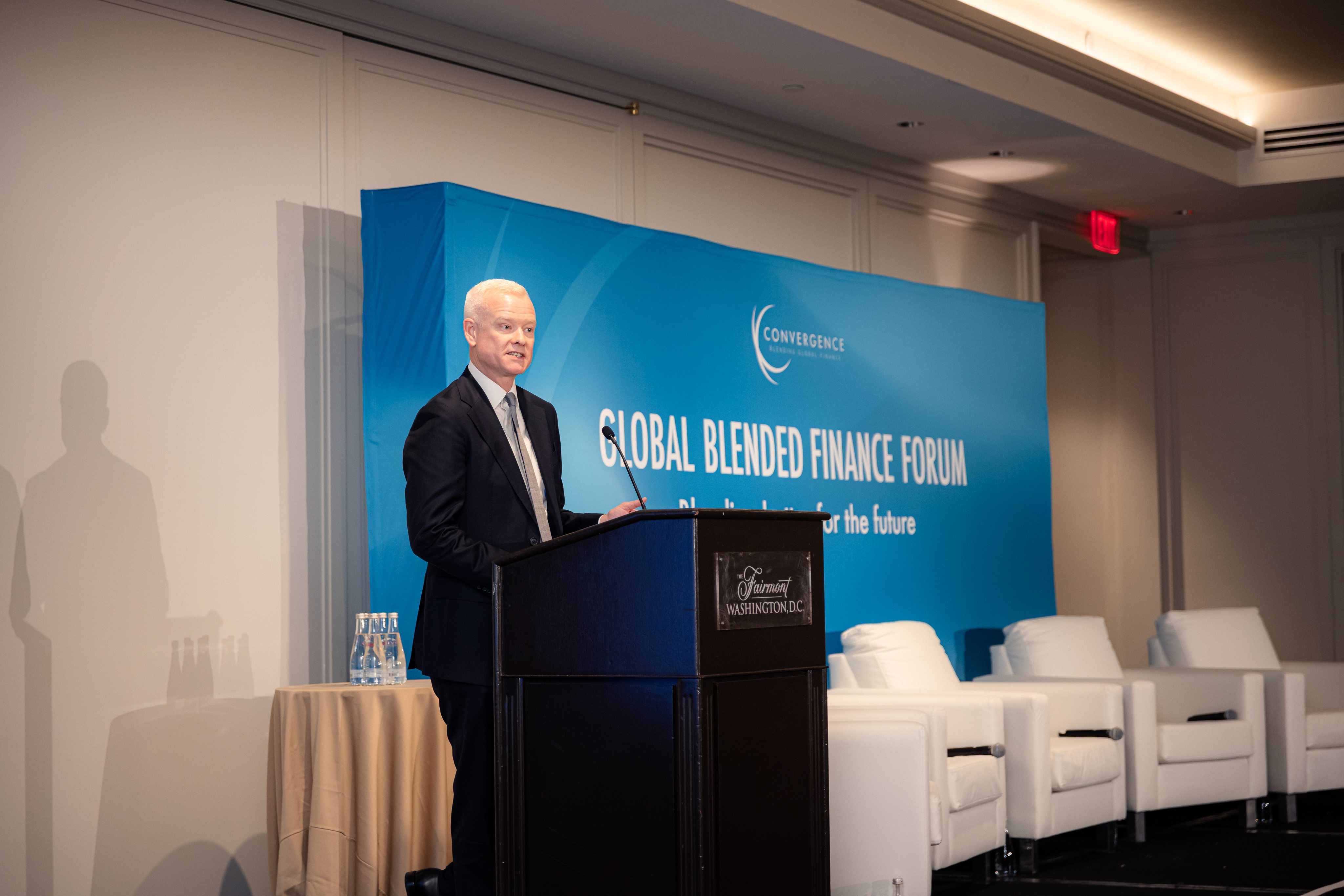
Many attendees are actively working on standardization. In a session on navigating declining ODA, Geneviève Brown, Executive Director of the Innovative Finance at Global Affairs Canada, discussed the G7’s recently launched Common Principles for Private Capital Mobilization initiative, which provides a roadmap for transparency, alignment, and collaboration between public and private actors. She described how they are working with the SCALED initiative to put those principles into action by identifying straightforward investment vehicles with standard terms that are familiar. Chris Clubb, Managing Director at Convergence, also presented Convergence’s efforts to move the field towards standardization by identifying 12 Private Investment Mobilization Models as effective and efficient approaches to standardize and scale SDG and climate investment in developing countries.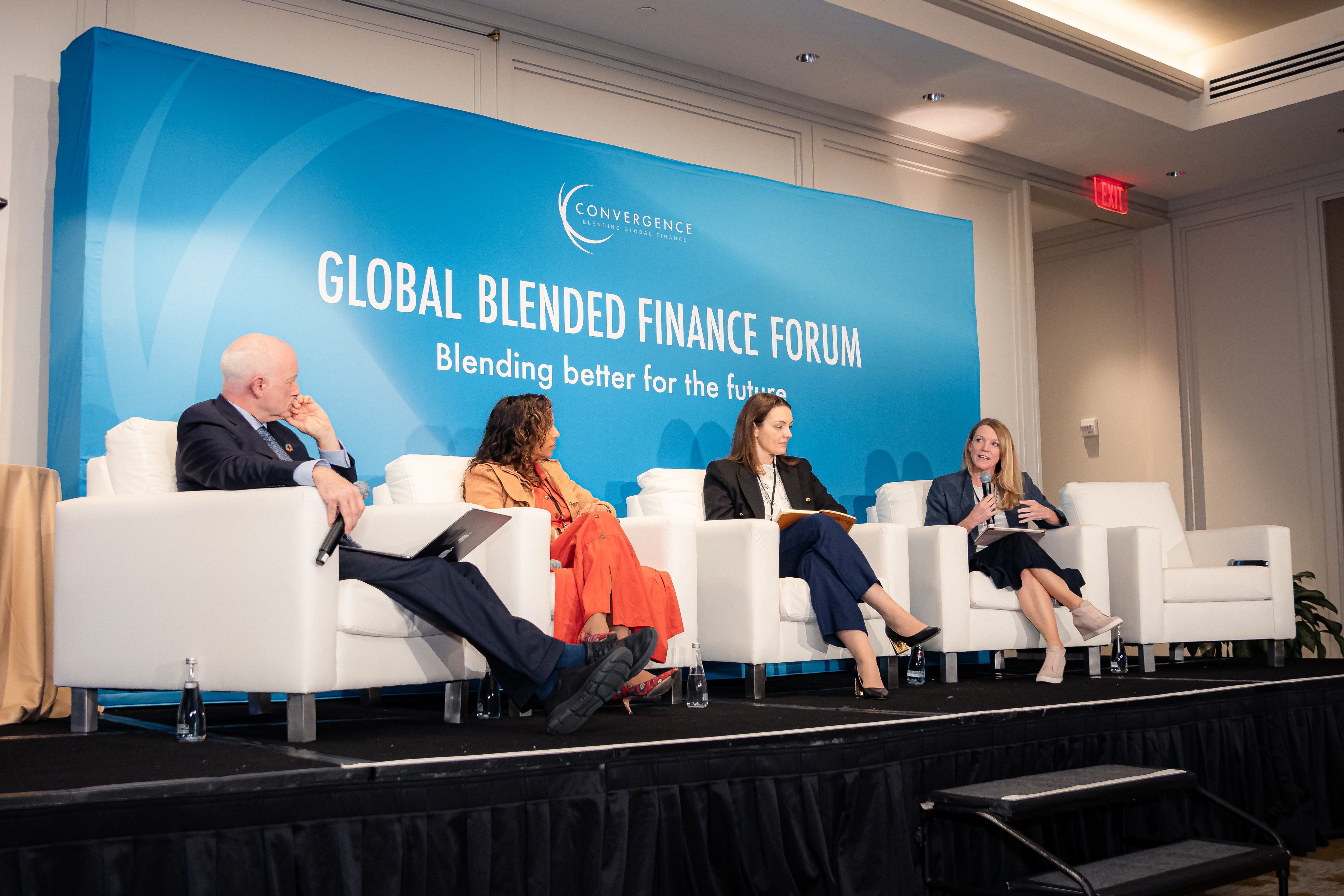
During the session Blended Finance 2.0: Standardizing Investment Models for Scale, panellists discussed the challenges to standardization, on balancing innovation and replication, and the importance of collaboration among donors, development finance institutions, and private investors. Susanna Gable, Deputy Director, Development Policy & Finance at Gates Foundation, made the point that for blended finance to meet its potential, it must standardize, “Standardization acts as a risk reduction tool for both donors and private investors by lowering transaction costs and accelerating deal phases. There is no other way to scale blended finance other than through standardization. It also sends a strong market signal that blended finance is serious, efficient, and impactful, though we must be mindful of its limitations in harder markets.” -
Growing enthusiasm for the insurance sector: With their deep expertise in risk modelling, product innovation, and capital allocation, insurers are a natural fit for blended transactions, yet they are relatively new entrants to the market. As a result there was a lot of enthusiasm around the potential of the insurance sector. The role of insurers and how best to engage them came up frequently throughout the Forum.
At the Forum, Convergence launched, in partnership with the Global Asia Insurance Partnership (GAIP), a Playbook on the Insurance Sector's Roles in Blended Finance at the Climate-Health Nexus. The playbook provides a practical roadmap for the insurance sector to act as risk advisors, capital providers, and enablers of tailored protection within blended finance structures that target climate-health resilience. It also explores how donors, DFIs and MDBs can support insurance participation in blended finance.
A number of new initiatives involving the insurance sector were discussed, including the Insurance Development Forum, a coalition of large global insurance companies co-chaired by the World Bank and the United Nations Development Program. Mr. Kaczmarek discussed BlackRock’s partnership with them to develop the Infrastructure Resilience Development Fund, which is focused on resilience and adaptation and provides insurance companies with a diversified emerging market infrastructure credit portfolio to complement their existing investment in developed markets. The Fund officially launched and began deploying capital in October. “Insurers manage $30 trillion in assets with only about 3% on average allocated to emerging markets and almost all of that in public market assets. A small allocation by this massive sector would send hundreds of billions of dollars of new investment to emerging markets,” stated Mr. Kaczmarek.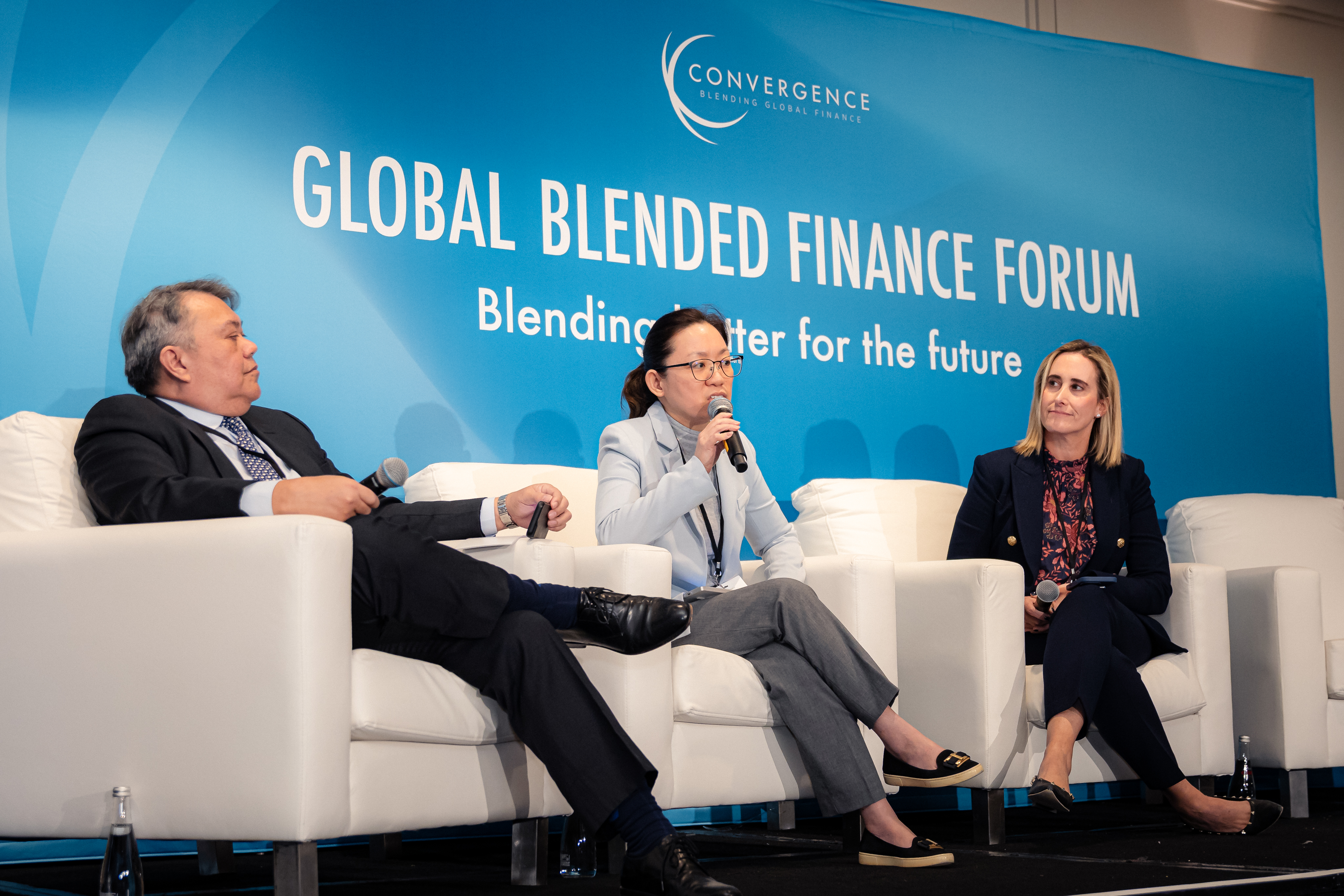 In a session focused on insurance that explored the value insurers can bring as risk advisors, insurers, and investors to crowd in private capital, Min Hung Cheng, CEO at GAIP, highlighted the importance of integrating insurance expertise early in project planning and risk assessment, which requires standardized approaches and frameworks that facilitate early collaboration. “The insurance sector can bring a lot of value, but you can only maximize that and optimize that if you bring them in early. Don’t bring them in on page 105 of appendix 5. Bring them in earlier and they can do a lot more,” stated Ms. Cheng. To underscore the critical role insurance plays in making investments viable by managing risk, Ms. Cheng quoted the Prime Minister of Barbados, Mia Mottley, concluding that “What’s uninsurable is not investable. What’s uninsurable is not bankable either.”
 -
Guarantees emerged as a popular tool: Throughout the Forum guarantees were highlighted as an increasingly important instrument to mobilize private capital efficiently, especially amid declining ODA budgets and mounting fiscal pressures.
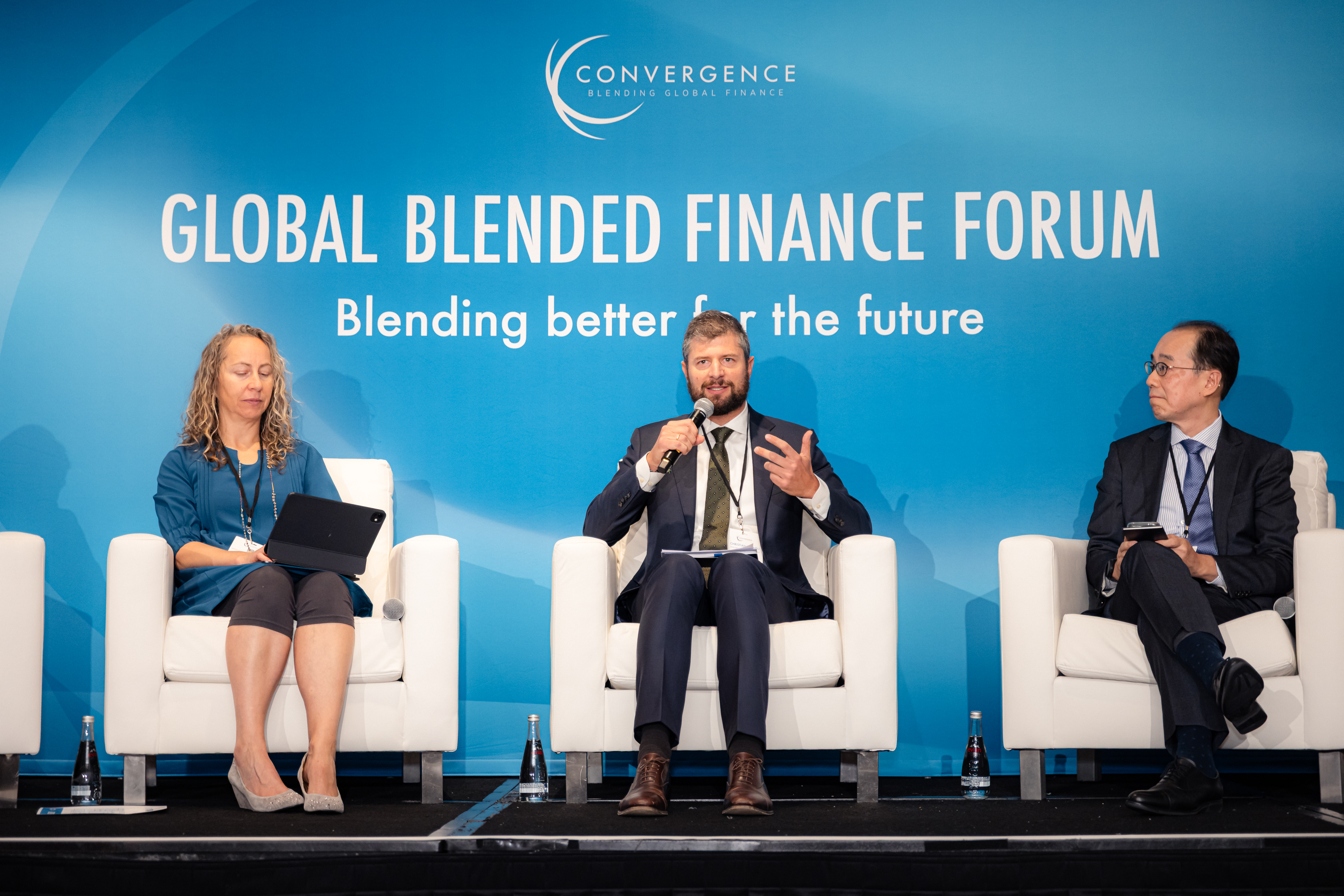 Christian Brändli, Head Private Sector Development at SECO, emphasized how guarantees, especially portfolio guarantees, are among the most effective blended finance tools in terms of mobilizing private sector funds per concessional dollar invested. He provided the example of Guarantco, the guarantee arm of the Private Infrastructure Development Group, which has demonstrated strong leverage by mobilizing $5.7 billion with only about $300 million of paid-in equity.
Christian also made the point that the use of guarantees has the potential to enable a gradual reduction of concessionality, “They provide real-world evidence that the perceived risks of investing in emerging markets is often higher than actual risks. And if we apply guarantees repeatedly and systemically, you can track how concessionality levels decrease over time as the markets mature.”
In some cases, concessional capital is not needed at all. Lasitha Perera, CEO at Development Guarantee Group, in a later session on Financing Climate-Smart Infrastructure, described the establishment of the Green Guarantee Company that operates commercially without concessional capital and helps to mobilize private capital by providing commercially rated (BBB stable) guarantees.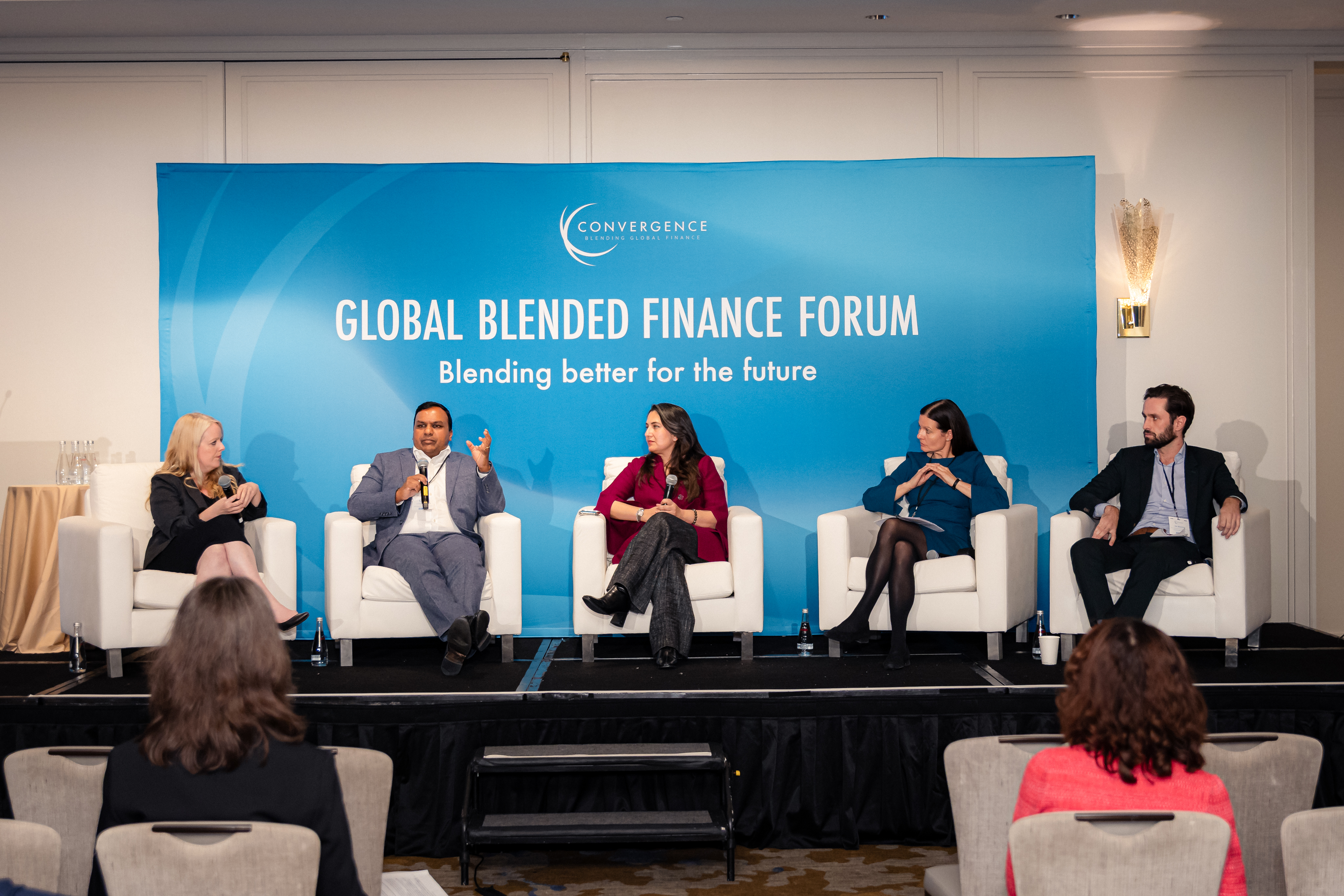 In the same session, Maheen Rahman, CEO at Infra Zamin Pakistan noted how guarantees serve not only as risk mitigation but also as market signals to stimulate commercial lending in underbanked sectors. As the guarantees cover local currency exposures, they become a popular tool for local private companies as well as local banks to move into new lending markets.
 -
A palpable optimism: Finally, the overwhelming sentiment throughout the Forum’s two and half days was optimism. Despite the many challenges facing blended finance and the market's still-tentative growth, attendees expressed confidence in the decade ahead. The past ten years have laid the foundation and built a solid evidence base, crystallizing lessons learned and clarifying what works, what doesn’t, and what works better. Participants left with a shared intent to move decisively from experimentation to standardization, replication, and scale.

 In a
In a  Christian Brändli, Head Private Sector Development at SECO, emphasized how guarantees, especially portfolio guarantees, are among the most effective blended finance tools in terms of mobilizing private sector funds per concessional dollar invested. He provided the example of Guarantco, the guarantee arm of the Private Infrastructure Development Group, which has demonstrated strong leverage by mobilizing $5.7 billion with only about $300 million of paid-in equity.
  In the same session, Maheen Rahman, CEO at Infra Zamin Pakistan noted how guarantees serve not only as risk mitigation but also as market signals to stimulate commercial lending in underbanked sectors. As the guarantees cover local currency exposures, they become a popular tool for local private companies as well as local banks to move into new lending markets.