Setuka Partners is a mission-driven boutique advisory firm based in India. It works with responsible enterprises and investment funds to forge partnerships that involve the movement of catalytic capital (debt, equity, grants) and capacity from overseas providers to social enterprises in Asia and Africa.
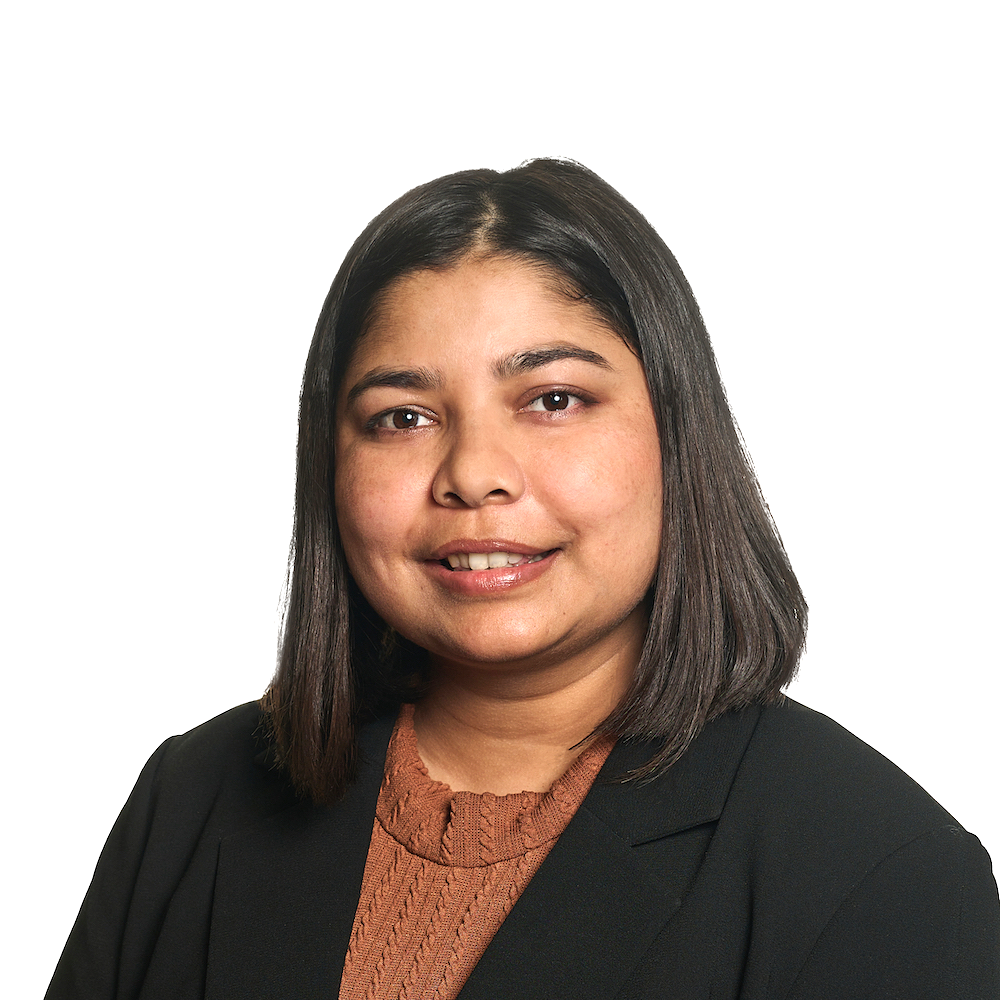
We spoke with Aman Khanna, Founder and Managing Partner at Setuka about their priorities, how they engage in blended finance, the opportunities and gaps they see for blended finance in Asia and Africa, and more.
Can you tell us about Setuka Partners’ mandate and how it engages in blended finance?
“Setuka” means “bridge” in Sanskrit. The name epitomizes our work in enabling the flow of capital and capacity between the “developed” and “developing” worlds. We actively work to eliminate this divide and want to see it disappear within our lifetimes.
Setuka Partners was founded with a mission to level the playing field for access to capital for entrepreneurs building impactful business models in resource-constrained environments. We do this by catalyzing capital from resource-rich environments into constructs that bring together investors with diverse risk-return expectations. This helps us break the exaggerated risk perception associated with capital-constrained environments.
We engage in blended finance by working with entrepreneurs, financial institutions, fund managers, and other stakeholders that positively influence entrepreneurship at one end and capital allocators like Development Finance Institutions (DFIs), foundations, asset managers, and other institutions that believe in investing for returns that are not limited to only the financial metric of short-term returns at the other end.
This engagement manifests in 3 different ways, all centered on our thesis to level the playing field for access to capital:
- Supporting capital allocators and entrepreneurs in building enduring partnerships in blended finance constructs
- Advising on the setup and evaluation of blended finance investments
- Cross-pollinating learnings between emerging markets on policy and private investing in blended finance
Can you walk us through a recent blended finance transaction that Setuka Partners has engaged in?
Setuka Partners has worked closely with the United States International Development Finance Corporation (DFC) on several single-borrower guarantees. One example is a guarantee structure developed for a highly impactful and commercially successful social enterprise called Arya.ag. The group works along the value chain of agri-commodities dominated by smallholder farmers in India to drive market access, financial inclusion, and climate resilience. Arya.ag provides loans to smallholder farmers against their commodity collateral allowing them to maximize earnings and creates access to a wider range of buyers in tandem with short term embedded finance to SMEs along the agri-value chain.
Despite its success, local banks and equity investors were wary of extending the financing the company needed to expand its impactful work. Local banks stayed away, citing the lack of a sufficiently long track record, while non-banks sanctioned very small ticket sizes with outsized collateral requirements and high risk premiums.
DFC first extended a 100% guarantee to a local bank for a $10 million loan to Arya.ag’s financing entity. Within a year of this financing, the company grew from $24 million to $50 million in assets under management and from 40,000 to 600,000 farmers impacted.
Further, DFC’s confidence in the business crowded in not only other impact investors like responsAbility but also local commercial capital providers like banks and non-banking financial companies with larger tickets and more reasonable collateral requirements. The local bank itself extended better terms for further financing to the company without the DFC guarantee.
DFC then extended an 80% guarantee to a local bank for $22.5 million of financing to the group’s embedded finance arm, which sparked exponential interest from commercial capital providers leading to not only more debt from local financing entities, but also to investments from International Finance Corporation (IFC), Swedfund, and Proparco.
The success of this transaction enabled Setuka Partners to close many other blended finance constructs with DFC and other institutions. Although the single-borrower guarantee product was onerous at first because it required aligning multiple stakeholders (i.e. borrower, guarantor, local bank, Indian borrower, local bank counsels, and DFC’s US counsel), Setuka’s management of the process until disbursement helped to establish this as an enduring product that is being replicated in India and other emerging markets. This is particularly significant in a context where several portfolio-level guarantees have remained underutilized.
As an advisory firm working to help enterprises fundraise, what if any impacts have you seen from the recent decline in official development assistance (ODA)?
The most direct and immediate impact has been the reduced availability of catalytic capital, in response there is a positive and a negative spillover effect on non-ODA capital flows seeking returns beyond short-term financial return metrics.
In some ways, it has been a much-needed wake-up call for custodians and allocators of private capital who may have been sitting on the sidelines, seeking more and more support from governments and philanthropic sources before taking the leap into impact investing. At Setuka Partners we have seen evidence of this in our work with a Dutch family office that has only recently started making allocations to African fund managers. Others like Trimtab, which describes itself as an “unapologetically impact-first” capital allocator backed by a few families, have been around for a while but the relevance of their work has risen significantly.
We believe it is positive that the United States is redirecting development finance toward strengthening critical supply chains, particularly the upstream stages such as critical minerals, pharmaceutical ingredients, and fertilizer production. These upstream sectors have historically attracted too little private investment, despite being essential to the success of more profitable downstream industries like renewable energy, medicines, and processed foods. Ensuring reliable and diversified access to these raw materials is critical for resilient and democratic global supply chains.
Which of the transactions supported by Setuka have incorporated a strong gender lens? How are the gender-related impacts being measured?
Five specific transactions that strongly address gender equality are INI Farms/Agrostar, Portea, Barka Fund, Samunnati and Avaana Capital. For example, the INI Farms/Agrostar, a social enterprise co-founded by a woman, supports smallholder farmers’ productivity through improved access to agri-inputs and raising incomes through access to organized markets. Setuka Partners worked with INI Farms/Agrostar to catalyze $15 million from a local bank supported by a DFI guarantee.
Gender-related impacts in each of these transactions have been measured in various ways. At the company or fund level, this has included the diversity ratio (men versus women) across senior, middle, and junior management roles. At the beneficiary level, this has included assessing the participation of women in supported businesses. For example, the $94 million financing we arranged from DFC and BII for Vistaar, a Micro, Small and Medium Enterprises (MSME) lender, specifically required the measurement and reporting of women’s participation within MSMEs financed by the facility. Other measures included tracking improved incomes for smallholder farmer households with relatively higher participation of women, such as dairy farming.
From your perspective, what are the biggest opportunities and gaps in the current blended finance ecosystem, particularly in Asia and Africa?
The key opportunity and challenge in today’s blended finance ecosystem are two sides of the same coin. The increasingly constrained availability of first loss and concessional capital presents an opportunity to demonstrate and highlight models that have already achieved significant leverage of private commercial capital. Such evidence is more relevant now than it ever was before, as the “fence-sitter” capital allocators are likely to pay greater attention to proven examples of successful blended finance structures than they did when concessional capital was assumed to be readily available.
Dependence on government and philanthropic capital to enter impact-focused investment vehicles before private or even DFI capital participates is a gap that appears somewhat less pronounced among diaspora investors from developing economies living in developed markets. This creates a meaningful opportunity to unlock additional diaspora capital in the current environment.
More diaspora capital can create a snowball effect in crowding in local capital from resource-rich segments of these economies, including large private companies and wealthy families. In turn, this can encourage institutional capital allocators in developed markets to invest. Although the blended finance ecosystem is well served with a plethora of advisory firms, there is a need for greater participation from practitioners with tangible experience in closing and evaluating funds and blended finance transactions (as this blog from Convergence appropriately highlights). This includes Impact investing-focused transaction advisors like Setuka Partners and legal firms like RPCK Rastegar Panchal and Climate Energy Counsel.
Finally, currency depreciation remains a constraint on the expansion of blended finance. Servicing only hard-currency earning businesses with blended finance vehicles addresses this to a certain extent both in terms of limiting the risk that hard currency investors are exposed to and expanding the pool of hard currency available locally in emerging markets to address the underlying imbalance that drives depreciation.
At the same time, this creates an opportunity for investors able to productively deploy local currency capital, including local private sector actors and diaspora investors. As blended finance practitioners, we at Setuka see this as a key frontier for growth, particularly in middle-and lower-middle-income economies.
What new blended finance trends do you anticipate over the next 3–5 years?
We believe guarantees, as a blended finance instrument, can be transformational, particularly in contexts where capital constraints are compounded by the liquidity concerns of capital allocators. We are already seeing more DFIs adopting guarantees. For example, Impact Fund Denmark is now independently allocating capital for guarantees following in the footsteps of the Swedish International Development Cooperation Agency (Sida).
We also expect the “wake-up call” triggered by declining ODA and rising macroeconomic uncertainty to drive stronger investor demand for evidence of successful blended finance models and demonstrated leverage of private capital.
How do you see Setuka Partners’ blended finance activities evolving in the future?
We plan to increase our focus on mobilizing local and diaspora capital, demonstrate successful examples of blended finance structures that achieve high leverage of private capital, and support private capital allocators beyond DFIs, including families, foundations, and sustainability-oriented institutions, in understanding and allocating capital to blended finance vehicles.
We will also continue to advocate with regulatory authorities in India, the market with our largest presence, to advance reforms that enable blended finance capital flows.
Capital allocation globally remains heavily skewed between the “haves” and “have-nots,” whether across developed and emerging economies, gender, race, or geography. We see blended finance as an essential mechanism for correcting this imbalance and enabling a more democratic and merit-based allocation of capital globally. We see ourselves as one small but committed participant within the broader ecosystem working toward this goal.